
Stepping on the Global Stage WPY 62 at the Natural History Museum - London
The sharp, white linen of my collared shirt tugged at my wrist. The lights of London flashed by the car window. I took a deep breath. This was it. The awards ceremony for the Natural History Museum's Wildlife Photographer of the Year competition.
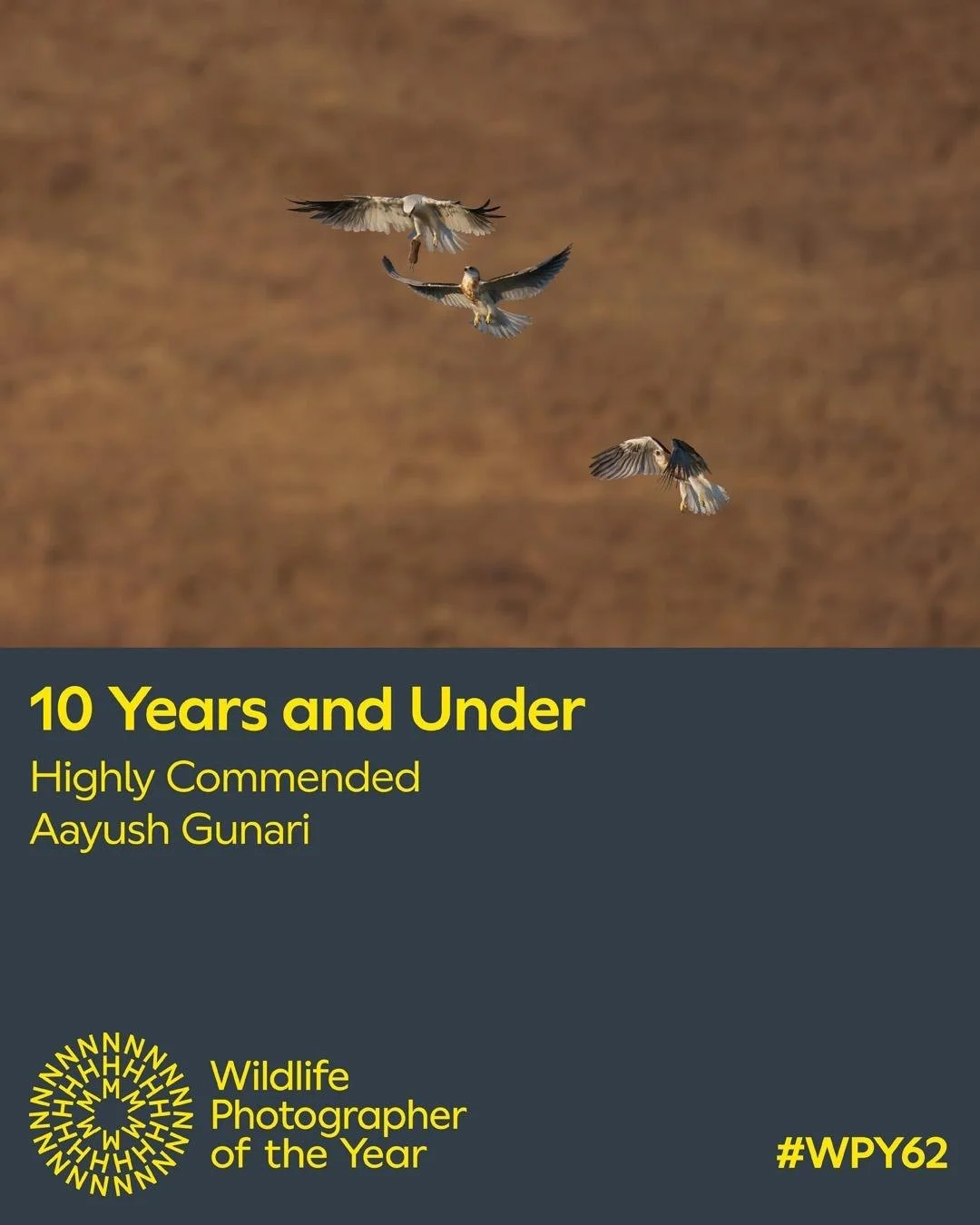
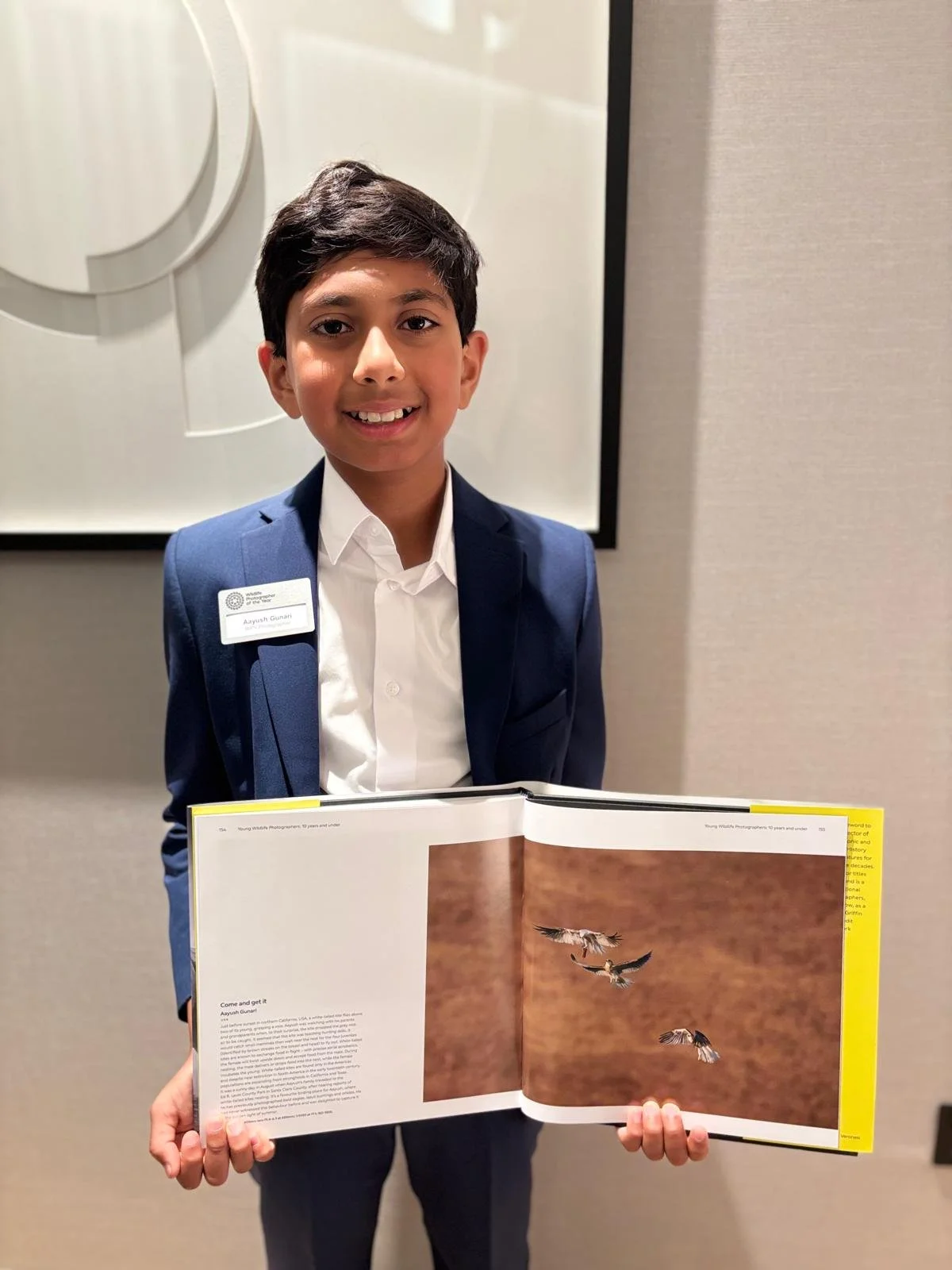
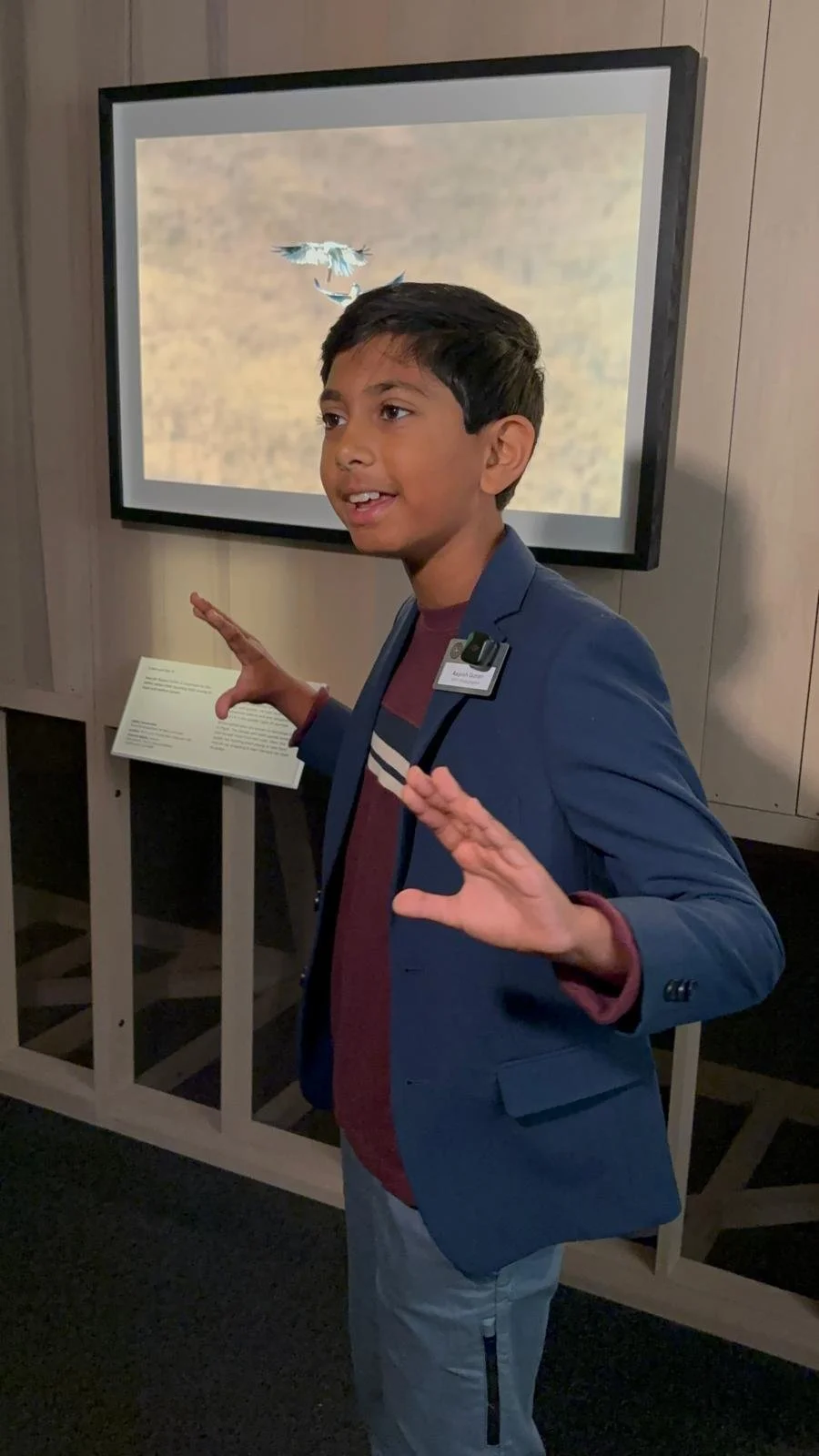
The photo that was the reason I was going to the awards ceremony popped into my mind. We had been birding at Ed Levin County Park, where we knew there was a nest of White Tailed Kites. As the sun started to set, the adult had brought in one last catch for the day. But instead of dropping it into the nest, it took it up to a height and waited for the juveniles to come and get it. When they got there, it would drop the food and the semi-fledged juveniles would have to catch it in mid air. This behaviour is called a food transfer and it was what my image was about. The sun illuminating the faces of the adult and the two juveniles, flying up towards the adult, with the background of the dry, golden grass had seemed like a perfect image to submit into the competition.
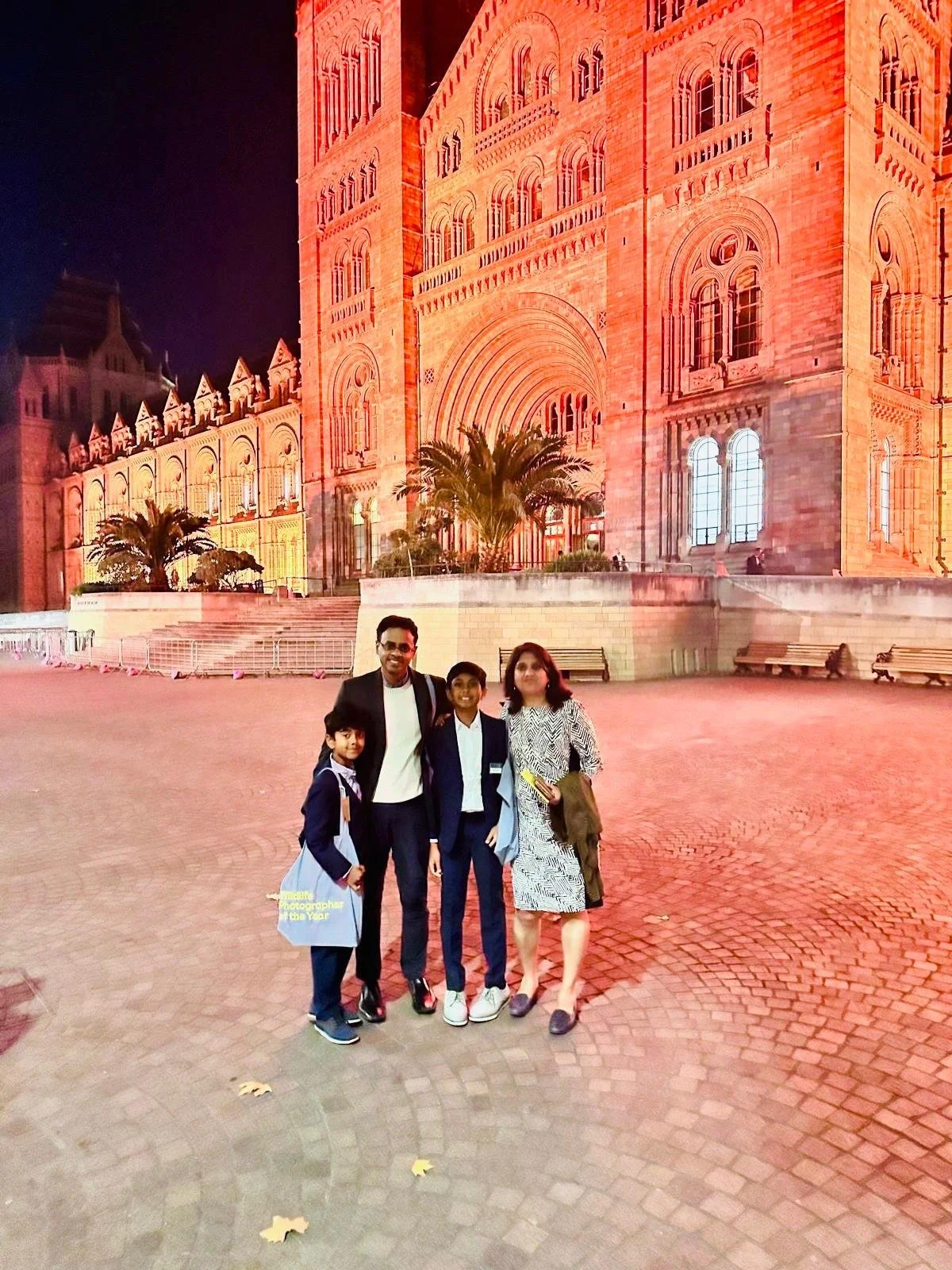
And now here I was. As the car pulled up alongside the Natural History Museum, I saw the grand architecture of the museum’s grand entrance. I stepped out of the car and adjusted my jacket.
My mom turned to face me. “I’m so proud of you Aayush.”
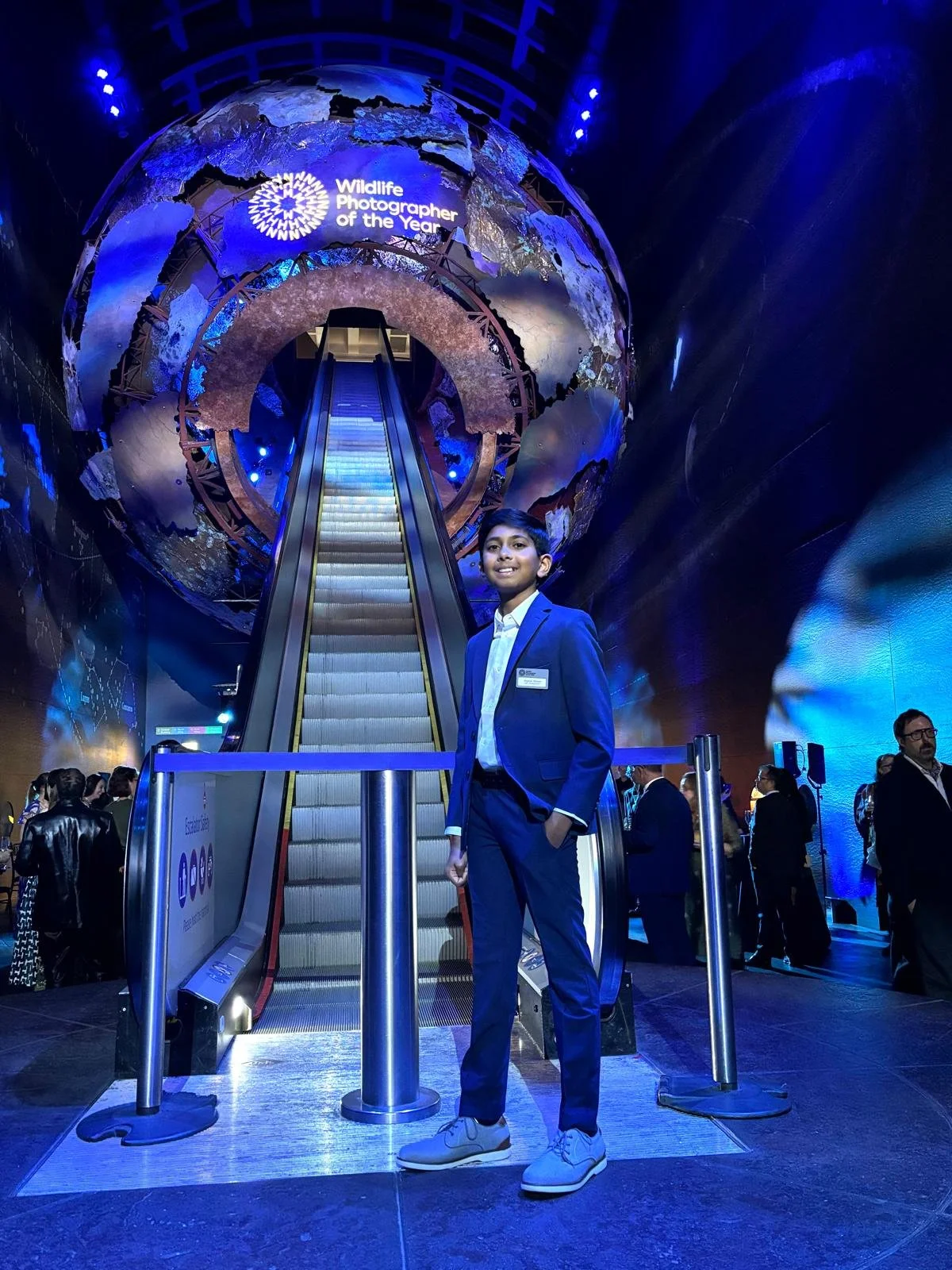
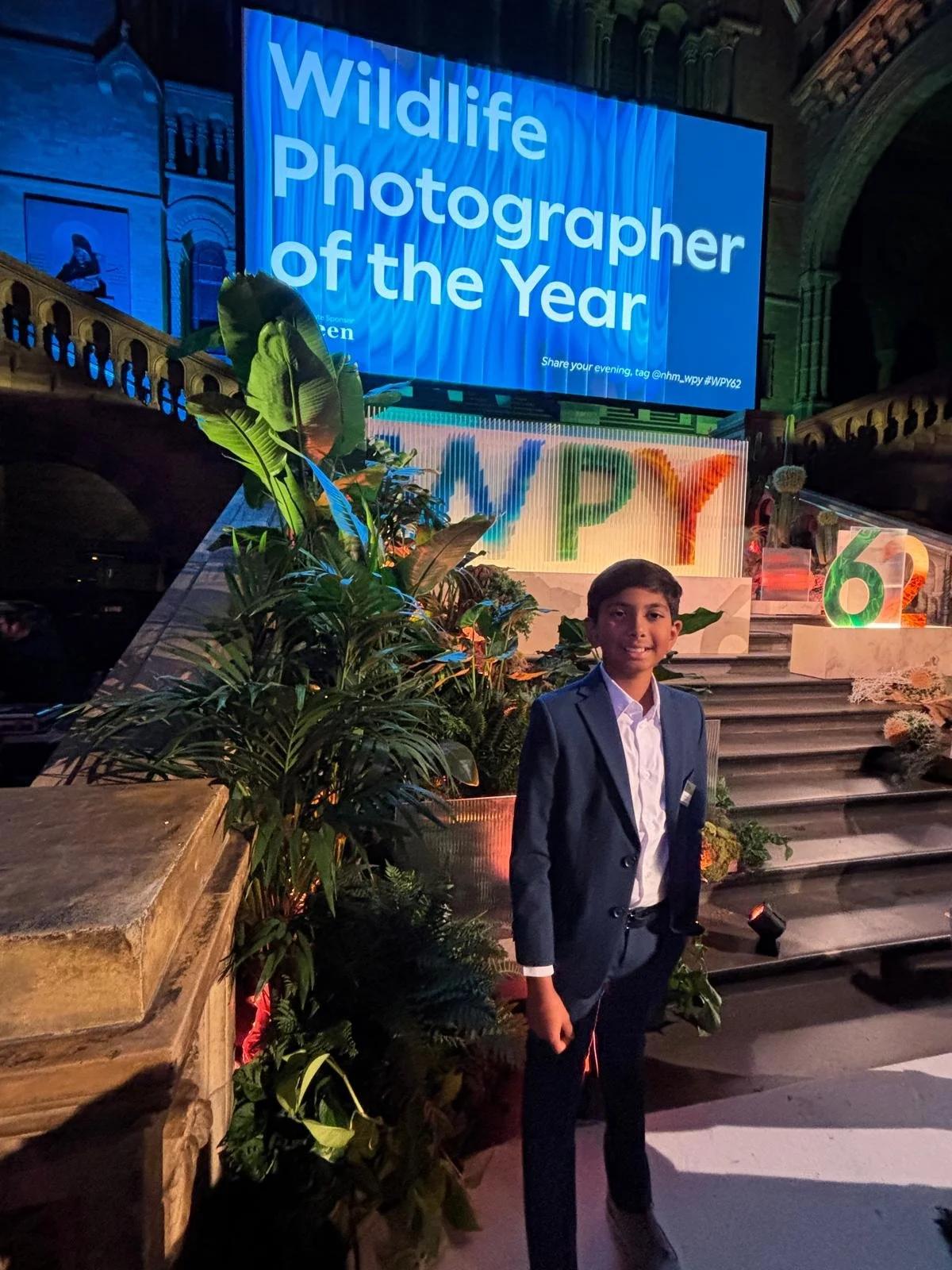
I smiled with excitement. “Let’s go!” Then we walked into the building. The first thing I saw when I entered the room wasn’t the giant screen saying Wildlife Photographer of the Year or the throng of people standing around and talking, but the stegosaurus fossil in the middle of the giant room.
And then I saw Sudhir Shivram. He was one of my favorite photographers, taking photos of tigers and lions and everything in between. I went up to him.
“Hi, I’m Aayush. I’ve seen your photos. They truly are amazing,” I said to him. And then we started talking. We talked about tigers, and where to see them in India, conservation, and so many other things. It was amazing, talking to someone who I had admired for so much of my photography time.
As we went around the room, meeting so many people that I knew from various platforms and interests, I was amazed. I was so thankful for the opportunity to be able to come here and meet so many new people. They were researchers, scientists, photo journalists and fellow photographers and their families. Each one was so welcoming and truly appreciative of everyone around. The Museum curators and events team went above and beyond to make the stage memorable and they left no stone unturned.
“Attention please. Dinner will be served shortly. Please take your seats. Thank you.”
We made our way to our table - table 18. We sat down and watched as the waiters brought steaming plates of mouth watering food to everybody’s tables. I sipped at the delicious, cool juice that was served alongside the food. We all started to eat.
And then, after about thirty minutes, the awards ceremony started. Dr. Doug Gurr, the head of the museum, came onto the stage to start the awards. He spoke about the record breaking number of entries this year [65,403], about the incredible photos that had been submitted from all over the world. He spoke about all the young photographers that had submitted their work, and about how it gave him hope that people from all over the world, from all different backgrounds and ages, could come together to focus on one thing: Wildlife.
The awards started, and I saw so many people’s incredible photos. I saw the winners go up onto the stage to give inspiring speeches. And then, I saw my photo. On the big screen, in front of some of the best photographers in the world. I felt like I was back at Ed R. Levin county park in California Bay Area, watching the evening sunset light hit the kites, illuminating the beautiful scene. I saw my name and everyone around me clapping, and I felt so fortunate.
I felt humbled and honored that I was able to be called into a room of some of the best photographers in the world and say that I was one of them. I do not take the opportunity lightly. To be able to talk with like-minded people who also cared so passionately about conserving and restoring the amazing natural world is truly a dream.
I saw the rest of the photos go by on the big screen. I saw deeply sobering images, and images of hope. I saw images of conservation wins, and conservation losses. I saw photos that deeply resonated with me. I saw stories of patience, and stories of quickness.
And as I looked at all of those pictures, I saw something in common. Whether it's a picture of an ant, or a picture of a whale, whether it’s a picture of a slime mould, or a picture of a tiger, every photographer was driven by one, single purpose. A passion to document the beauty of nature, and show how we must save it.
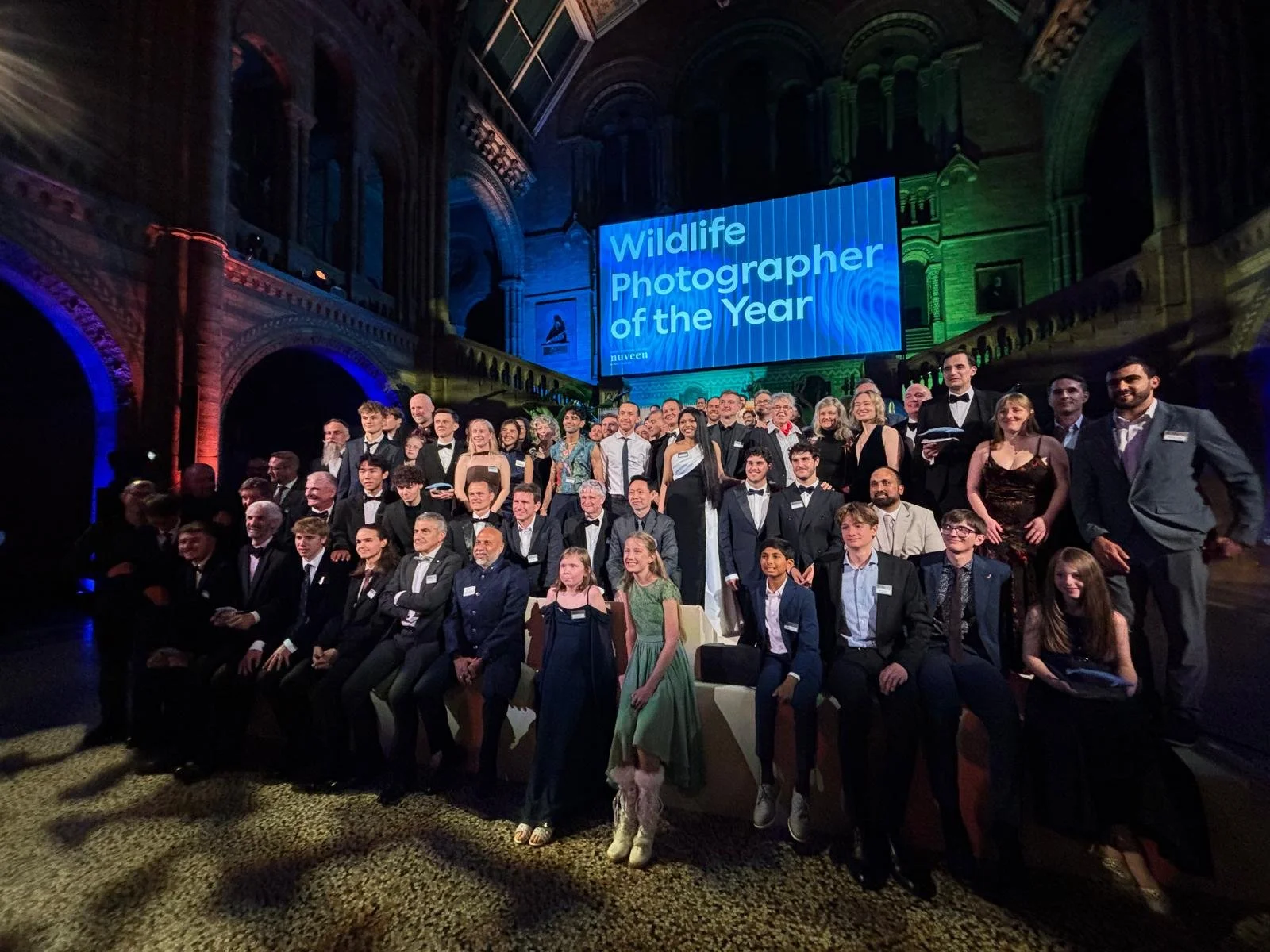
In that room, I learned something and it has lingered in me this week:-Alone, none of us can raise enough awareness.
Alone, none of us can share enough stories, or tell enough people.
It is an effective beginning, but when we come together, I know that we can work together to save the natural world.
Power of togetherness for the common cause - Nature is the biggest gift to humans and we need to protect it for the future generations.